Typography, the art and technique of arranging type, is an essential aspect of design and communication. The choice of typeface, its arrangement, and the way it interacts with other design elements can significantly impact the message’s effectiveness and visual appeal. As a proficient SEO expert and senior copywriter, I am excited to take you on a journey through the basics of type design and selection. Whether you’re a designer, marketer, or business owner, understanding the fundamentals of typography will empower you to create visually engaging and impactful content. The fontles.com offers an extensive range of stylish and versatile fonts that can enhance the aesthetics of any design project.
The Fundamentals of Typeface
1. Typeface Categories
Before delving into type design and selection, let’s explore the primary categories of typefaces:
a. Serif Typeface
Serif typefaces are characterized by small lines or strokes, known as serifs, at the ends of characters. They are often associated with tradition, elegance, and formality. Serif fonts are commonly used in printed materials such as books, newspapers, and formal documents.
b. Sans-Serif Typeface
Sans-serif typefaces, as the name suggests, lack serifs. They are clean, modern, and have a straightforward appearance. Sans-serif fonts are widely used in digital media, websites, and user interfaces due to their legibility on screens.
c. Script Typeface
Script typefaces mimic handwritten calligraphy and have a flowing, elegant appearance. They are commonly used for invitations, greeting cards, and other applications that require a touch of personalization and charm.
d. Decorative Typeface
Decorative typefaces are highly stylized and often used for specific purposes or in limited contexts. They can add a unique flair to designs, but caution should be exercised to ensure readability and suitability for the intended message.
2. Anatomy of Type
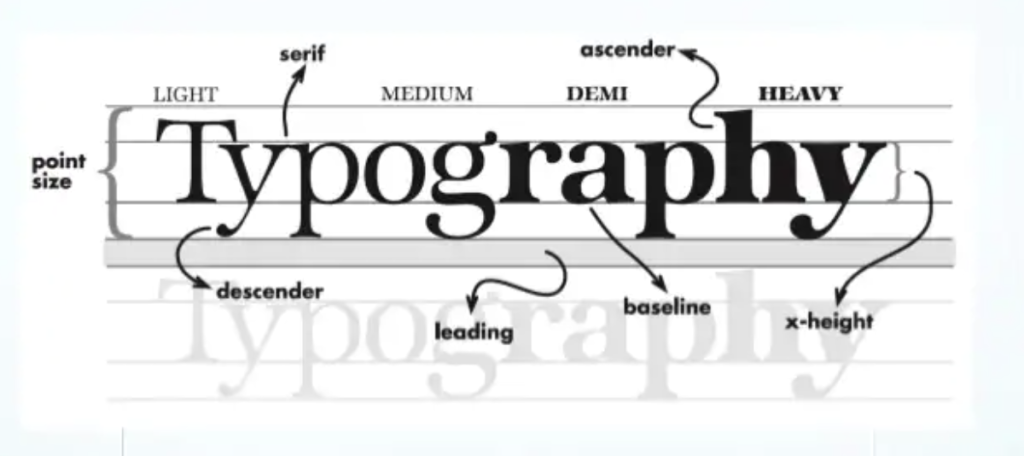
Understanding the anatomy of type is crucial for making informed design decisions. Here are the key components of letterforms:
a. Baseline
The baseline is an imaginary line on which the characters rest. It provides a visual reference for aligning the type.
b. X-Height
The x-height refers to the height of lowercase letters (excluding ascenders and descenders) relative to the baseline. It significantly affects the legibility of a typeface.
c. Ascender and Descender
Ascenders are the parts of certain characters (e.g., ‘h,’ ‘b,’ ‘d’) that extend above the x-height, while descenders (e.g., ‘g,’ ‘p,’ ‘q’) extend below the baseline.
d. Counter
The counter is the enclosed or partially enclosed space within letters, such as ‘o,’ ‘e,’ or ‘d.’
e. Serif and Terminal
Serifs are the small strokes or feet that extend from the ends of characters in serif typefaces. Terminals refer to the end points of strokes in letters without serifs.
3. Kerning and Leading
Kerning refers to the adjustment of space between individual characters to ensure even and visually pleasing spacing. Leading, on the other hand, is the spacing between lines of text and affects the overall readability and aesthetic flow.
The Role of Typography in Design
Typography is an integral part of design and plays a critical role in conveying information and emotion. Here’s how it impacts design:
1. Visual Hierarchy
By varying font sizes, weights, and styles, designers establish a visual hierarchy, guiding readers’ eyes through the content in a structured manner. This hierarchy helps highlight key information and make the content more scannable and accessible.
2. Brand Identity
Typography is a powerful tool for shaping a brand’s identity. Consistent use of specific typefaces can evoke certain emotions and associations, reinforcing the brand’s personality and values.
3. Emphasis and Contrast
The strategic use of bold, italic, or different typefaces allows designers to emphasize specific words, phrases, or sections. Contrast in typography helps create visual interest and ensures essential elements stand out.
4. Readability and User Experience
Legible typography is vital for ensuring a positive user experience. Well-chosen typefaces, appropriate sizes, and sufficient leading contribute to the readability of the content.
Choosing the Right Typeface
1. Understand the Audience and Context
Consider the target audience and the message’s context when selecting a typeface. A font that works well for a children’s book may not be suitable for a financial report.
2. Pairing Fonts
When using multiple typefaces in a design, ensure they complement each other and create a harmonious visual balance. Avoid using too many fonts, as it can lead to visual clutter.
3. Test for Readability
Before finalizing a typeface, test it for readability on different devices and screen sizes. Pay attention to legibility and how it interacts with other design elements.
The Future of Typography
As technology continues to evolve, so does typography. The digital age has opened up new possibilities, with variable fonts and web typography leading the way. Variable fonts allow for greater flexibility in font customization, while web typography brings a plethora of font options for online content.
Conclusion
Typography is not merely about arranging letters; it is an art form that shapes how we perceive and interact with content. By understanding the fundamentals of type design and selection, you can elevate your design projects and effectively communicate your message.
From the basics of type anatomy to the role of typography in branding and user experience, this article has covered essential aspects of typography. Armed with this knowledge, you can confidently embark on your typographic journey and create designs that stand out, leaving a lasting impression on your audience.
Remember, in the world of design, the right typography can indeed make a significant difference, allowing you to reach new heights and leave your competitors behind.